





Safe Online Casino Australia: What to Check
 Available in US
Examine licensing evidence, game fairness, payment controls and account protection before depositing with an online casino.

Table of Contents
- What Makes an Online Casino Safe in Australia?
- PayID Deposits, Casino Payments, and the No-Deposit Trap
- How to Judge a Casino Before Playing for Real Money
- The 2026 Australian Casino Landscape: Local Rules and Offshore Access
- Australian Casino Sites: Reading a Licence, Footer, and Security Certificate
- Safe Play and Payment Mechanics at Online Casinos
- Mobile Gambling Safety: Login, Devices, and Responsible Controls
- Safe AU Casinos and the Limits of Offshore Protection
- Curacao Casino Licensing and Safety for Australian Players
- Offshore Gambling, VPN Use, and Regulatory Evasion Risks
What Makes an Online Casino Safe in Australia?
A casino can look polished and still leave basic safety questions unanswered. From the operator side, the useful test was never the logo, the welcome offer, or a prominent claim about being “trusted”. It was the evidence behind the account, the games, the money flow, and the controls available when play stopped being recreational.
For Australian players, that baseline needs one important qualification: no domestically licensed real-money online casino exists for Australian players. The safety signals below therefore describe the controls associated with licensed gambling operations and the evidence that should be examined on any platform claiming to serve the market. They do not turn an offshore casino into an Australian-licensed business.
Certified randomness is the first technical signal
Licensed casinos in Australia are mandated to use certified Random Number Generators for pokies and table games. An RNG determines the outcome of each game event; it should not be adjusted according to the player’s deposit, recent losses, or account status.
The meaningful word is certified. A casino saying that its games are random is making a statement. A certification or independent testing record is supporting evidence. Independent firms such as eCOGRA and iTech Labs audit RNG systems for licensed casinos in Australia. These audits examine whether the software produces outcomes in line with its stated design rather than merely repeating the operator’s marketing language.
This list highlights key facts to consider when reviewing safe online casino options for Australian players in 2026. Use the details below to assess licensing, available bonuses, deposit requirements and, where provided, payout speed.
License: Curacao · Bonus: up to A$10,000 multi-stage + 500 free spins · Min. deposit: A$20 (POLi) Lucky Dreams holds a Curacao licence and offers a multi-stage bonus of up to A$10,000 with 500 free spins. The minimum deposit is A$20 via POLi.
Bonus: up to A$7,500 + 550 free spins across 10 deposits, 50x wagering · Payout speed: crypto under 1 hour, PayID 1-3 business days · Min. deposit: A$20 (A$30 to qualify for the bonus) Ricky Casino features a bonus of up to A$7,500 plus 550 free spins across 10 deposits, with 50x wagering. Crypto payouts are stated as taking under 1 hour, while PayID payouts take 1–3 business days; the minimum deposit is A$20, or A$30 to qualify for the bonus.
License: Curacao eGaming OGL/2023/174/0082 (Dama N.V.) · Bonus: up to A$10,000 + 500 free spins across 4 deposits · Min. deposit: A$15 LevelUp Casino operates under Curacao eGaming OGL/2023/174/0082 through Dama N.V. It offers up to A$10,000 plus 500 free spins across 4 deposits, with a minimum deposit of A$15.
License: Curacao eGaming Licence · Min. deposit: A$10 PlayWest is listed with a Curacao eGaming licence. Its minimum deposit is A$10.
License: Curacao – Antillephone N.V. (Versus Odds B.V.) · Bonus: up to EUR 2,000 across 5 deposits + 200 free spins · Min. deposit: EUR 20 Thor Casino is licensed in Curacao by Antillephone N.V. for Versus Odds B.V. Its offer includes up to EUR 2,000 across 5 deposits and 200 free spins, with a EUR 20 minimum deposit.
License: Curacao eGaming Licence · Min. deposit: A$10 Stake is listed with a Curacao eGaming licence and has a minimum deposit of A$10.
License: Curacao Gaming Control Board (TechSolutions Group N.V.) · Bonus: 100% up to A$250 + 100 free spins (1st deposit) Bizzo Casino is associated with the Curacao Gaming Control Board through TechSolutions Group N.V. Its first-deposit offer is 100% up to A$250 plus 100 free spins.
License: Curacao · Bonus: up to A$2,000 Golden Pokies is listed with a Curacao licence and offers a bonus of up to A$2,000.
License: Curacao eGaming (Roby Games Ltd) · Bonus: 100% up to A$750 + 200 free spins Roby Casino operates under Curacao eGaming through Roby Games Ltd. It offers a 100% bonus up to A$750 plus 200 free spins.
License: Curacao Gaming Control Board OGL/2023/174/0082 (Dama N.V.) · Bonus: up to A$5,000 + 300 free spins across 4 deposits SpinsUp is listed with Curacao Gaming Control Board licence OGL/2023/174/0082 through Dama N.V. Its promotion provides up to A$5,000 plus 300 free spins across 4 deposits.
Auditors test RNGs over millions of spins to assess whether the Return to Player, or RTP, matches the advertised value. RTP is a long-run mathematical measure, not a promise about one session. It does not mean that a particular player will receive that percentage back, nor does it remove the volatility of a game.
That distinction matters with pokies. A volatile game can produce long gaps between substantial wins even when its tested RTP is accurately stated. “Fair” describes the game’s mathematical operation. It does not mean predictable results.
Independent testing must connect to the actual games
A testing badge is useful only when it identifies what was tested and by whom. A generic seal placed in a footer proves little if it does not relate to the software, game provider, or current operator.
The strongest evidence is a clear connection between the casino’s games and a recognised testing process. Game information should not be limited to promotional descriptions. A player needs enough transparency to understand the relevant RTP and the nature of the game’s volatility where those details are supplied.
Online casino pokies require more transparency to ensure fair play, according to a specialist industry review. That is a narrower observation than a universal rule, but it points to a practical weakness: an attractive game catalogue can conceal how little information is available about the underlying mathematics.
A familiar provider name is not a substitute for verification. NetEnt or Pragmatic Play branding may identify software, but it does not by itself prove that every site displaying the logo is authorised to distribute those games. The operator, the game supplier, and the testing evidence are separate parts of the chain.
Player funds should be separated
Licensed operators in Australia are required to segregate player funds from operational funds. The purpose is straightforward: money held for players should not simply be treated as ordinary working capital for salaries, marketing, or other business expenses.
This is an accounting and custody safeguard, not a guarantee that every withdrawal will be immediate or that a dispute will end in the player’s favour. It does, however, show whether the operator’s structure recognises a basic difference between player balances and company revenue.
The wording on a website matters. “Funds are secure” is broad promotional language. A meaningful statement explains that player funds are held separately, identifies the applicable obligation, and fits with the operator’s published terms. Vague reassurance without supporting detail is not the same thing.
Encryption protects the account, not the outcome
SSL encryption is used to protect personal and financial information on licensed Australian gambling platforms. It helps secure the connection between the device and the website while login details, identity information, and payment data are transmitted.
Encryption does not make a dishonest operator honest. It does not certify the RNG, guarantee a withdrawal, or establish that the casino is authorised to offer its product in Australia. These are different controls addressing different risks.
The practical inspection is simple: the site should load over HTTPS, the browser should show a valid security indicator, and the certificate should be issued by a trusted issuer. A padlock alone should not be treated as a complete safety assessment. It protects the channel. It does not validate the business at the other end.
Security is layered. One layer missing.
- Verify the presence of certified RNG audits from firms like eCOGRA or iTech Labs
- Check for clear separation of player funds from operational capital
- Look for visible responsible gambling tools like deposit limits
- Rely on a casino’s logo or welcome offer as proof of safety
- Assume a generic security seal in the footer verifies specific software
- Treat promotional “fairness” claims as technical evidence
Responsible-gambling controls are part of safety
A casino that makes deposits easy but makes limits difficult to find is revealing its priorities. Licensed operators in Australia must provide responsible gambling tools such as deposit limits and self-exclusion. These controls are not decorative links in a footer; they are mechanisms that should affect the account when activated.
Responsible gambling tools in Australia include deposit limits, pausing play, and self-exclusion programs. Each addresses a different situation. A deposit limit restricts funding. A pause interrupts access for a chosen period. Self-exclusion is a stronger separation from the account and gambling activity.
The wording and operation should be clear. A control that requires repeated contact with sales staff, or that can be cancelled instantly during an impulsive session, deserves scrutiny. The safer design makes the option visible, records the request, and explains what happens to the account afterwards.
No casino should be treated as a source of income. It is entertainment only, and registration and gambling are for people aged 18 or over who can keep play within a defined limit.
A usable baseline
The core safety picture is therefore cumulative:
- certified RNGs for pokies and table games;
- independent testing from bodies such as eCOGRA or iTech Labs;
- transparent game information, including RTP where stated;
- segregated player funds;
- SSL protection from a trusted issuer;
- visible deposit limits, play pauses, and self-exclusion.
No single badge settles the question. Safe casinos online are identified by consistent evidence across these areas, not by a “safe” label repeated in advertising. The next checks concern how deposits are presented and why a no-deposit promotion says far less about operator safety than its headline suggests.
PayID Deposits, Casino Payments, and the No-Deposit Trap
PayID can be a practical way to fund a gambling account, but the payment rail does not make the casino safe by itself. The important distinction is between securing a transaction and assessing the operator receiving the money. A protected transfer can still be sent to a site with unclear ownership, restrictive withdrawal terms, or no meaningful route for resolving a dispute.
Is PayID safe for casino deposits?
The answer depends first on where PayID appears. A genuine PayID option should be visible inside the casino cashier, with the recipient details and transaction instructions shown before the transfer is made. A message asking for payment to an unrelated personal account is not the same thing as a verified cashier process. It creates uncertainty over who controls the funds and whether the deposit will be matched to the gambling account.
PayID also does not turn an offshore casino into an Australian-licensed operator. Under the Interactive Gambling Act 2001, companies cannot offer online casino games to people in Australia. That legal position remains separate from the technical operation of a payment method. A transfer may work while the underlying casino still sits outside Australian gambling protection.
The sensible safety checks are therefore narrow and mechanical:
- confirm that PayID is listed in the casino’s own cashier;
- compare the displayed recipient information with the instructions on the payment screen;
- avoid requests made through unsolicited messages or social media;
- keep the transaction receipt and reference;
- check the minimum deposit, currency, and withdrawal conditions before sending funds.
A payment page should also use SSL encryption to protect personal and financial information. The padlock alone is not proof that the business is honest; it shows that the connection is protected. That is useful security, but it is not a licence, a fairness audit, or a promise that a withdrawal will be approved.
PayID versus other casino payments
The same separation applies to cards, POLi, e-wallets, and bank transfers. Each method has its own authentication and processing risks, while the casino has separate obligations concerning identity, account terms, and withdrawals. No payment logo can substitute for checking the operator’s legal identity and the conditions attached to the account.
This is where tighter KYC and AML procedures matter. A specialist industry review describes Australian online casino rules as having tightened identity and anti-money-laundering checks. In practice, that means a deposit may not be the final step in account verification. The operator may request identity documents, evidence of address, or information about the source of funds before allowing withdrawals. Refusing to provide required documents can leave a balance inaccessible under the site’s terms, even if the original PayID transfer was completed successfully.
Payment Safety Check
- Confirm PayID is listed directly within the official casino cashier
- Match recipient details with the instructions on the payment screen
- Ensure the payment page uses valid SSL encryption
- Verify minimum deposit and withdrawal conditions before sending funds
The safer approach is to treat verification as part of the payment process, not as an unexpected obstacle after a win. The name on the account, payment method, and identity documents should be consistent. Terms covering reversed deposits, third-party payments, pending transactions, and account closure deserve attention before money is sent.
Why “no deposit” says very little
A “no deposit” bonus is marketing, not a safety certificate. It may allow promotional play without an initial cash deposit, but it does not establish that the casino is licensed for Australian online casino games, that its games are independently tested, or that bonus winnings can be withdrawn. It also does not prove that the operator will handle personal information responsibly.
The phrase can conceal important conditions: identity verification, a limited eligible game selection, a minimum cash deposit before withdrawal, or bonus-specific restrictions. The exact terms control the offer. A free balance is not the same as withdrawable money.
This applies equally to a so-called safe casino no-deposit bonus or a no-deposit offer attached to pokies. The word “safe” may describe the promotional wording rather than the operator’s controls. It should never be inferred from the absence of an initial payment.
Responsible gambling tools provide a more relevant signal. Licensed operators are required to provide controls such as deposit limits and self-exclusion. Those tools concern account management and harm reduction; they do not validate a bonus. Where a site makes responsible-gambling controls difficult to find, refuses to explain its withdrawal rules, or pushes a bonus before presenting basic account terms, the promotion is doing too much of the selling.
No deposit, no shortcut.
How to Judge a Casino Before Playing for Real Money
A safe online casino for real money is not identified by its welcome banner. The useful evidence appears before the first deposit: who operates the site, which regulator is named, how identity checks work, and what happens when a withdrawal is disputed. I have seen attractive front ends conceal vague ownership and unclear payment rules. The assessment has to start behind the marketing.
Confirm who is allowed to offer the product
Australia has no domestically licensed real-money online casino for Australian players. Under the Interactive Gambling Act 2001, companies cannot offer online casino games such as pokies, roulette or blackjack to people in Australia. That changes the meaning of a “safe AU casino real money” claim: it must not be read as proof of an Australian casino licence.
An offshore operator may display a licence from another jurisdiction, but that does not place it under Australian consumer law or create an Australian complaint route. The provider’s legal name, trading name, licence jurisdiction and terms should be consistent. A review that praises an operator without identifying the legal entity is not much of a review.
Legal Status No domestically licensed real-money casino exists for AU players
Primary Law Interactive Gambling Act 2001
Safety Verification Independent audits (eCOGRA, iTech Labs) and segregated funds
Treat KYC as an operating test
Identity verification is part of the account relationship, not an unexpected obstacle at the cashier. A casino may request identity and address documents, and the newer Australian rules have tightened KYC and AML procedures for online casinos, according to a specialist industry review. The important point is consistency: the privacy policy, verification policy and terms should explain what information is collected and when an account can be restricted.
A request for documents is not automatically evidence of misconduct. Refusal to explain the process is more telling. Before playing, the account holder should know whether mismatched details, duplicate accounts or third-party payments can affect withdrawals. These clauses often matter more than the promotional headline.
Check the game-fairness evidence
For a licensed Australian gambling product, certified Random Number Generators are mandated for pokies and table games. That is a meaningful technical safeguard, but it does not turn an offshore casino into a locally licensed one. The site should identify its game providers and explain how randomness or testing is verified.
Names such as NetEnt and Pragmatic Play may help establish where games originate, but a provider logo alone proves little. The question is whether the operator gives a clear account of the testing arrangement and the advertised RTP. “Fair” is a conclusion. An audit reference or technical explanation is evidence.
Short version: logos are not audits.
Examine funds and dispute handling
A licensed operator in Australia is required to segregate player funds from operational funds. The policy should state how customer balances are treated and whether the named licensee, rather than merely the brand, holds responsibility for the account. Offshore terms may describe a different structure, so domestic safeguards must not be assumed.
There should also be a formal pathway for escalating a dispute to an impartial regulator where that licensing framework provides one. It is worth identifying the regulator before depositing, not after a withdrawal becomes contested. No licence guarantees prompt winnings, fair bonus enforcement or a successful complaint. It only defines the framework in which the complaint may be considered.

Set withdrawal expectations before playing
A serious pre-deposit check includes the withdrawal section, not just the deposit methods. It should cover verification, permitted account ownership, fees, pending periods, wagering conditions attached to bonuses and reasons for a payment review. If the wording allows the operator to delay or cancel a withdrawal without a defined process, the risk is visible in advance.
The same applies on mobile. A safe casino mobile experience should retain access to the full terms, verification information and account history rather than compressing them into unreadable screens. Mobile access is convenient; it is not a separate safety standard.
The practical conclusion is restrained. Online casino games are not automatically safe because the site is polished, the app loads quickly or reviews are positive. A safer real-money assessment is built from verifiable ownership, transparent KYC, credible game-fairness evidence, clear fund treatment and a defined dispute route. Players must be 18 or over and treat casino play as entertainment, not income.
The 2026 Australian Casino Landscape: Local Rules and Offshore Access
Australia’s gambling market is regulated through a combination of federal and state or territory rules. That structure matters because a licence for one gambling product does not automatically authorise another. A domestic operator may lawfully provide a regulated betting service while having no legal basis to offer online pokies, roulette, blackjack, or live-dealer casino games to Australian customers.
The central federal law is the Interactive Gambling Act 2001. It makes it illegal for gambling providers to offer certain online services to people in Australia. Online casino games fall within the category of prohibited interactive gambling services when supplied to an Australian customer. There is no domestically licensed real-money online casino for Australian players, and no Australian gambling licence exists for casino games because offering that product locally is against the law.
Legal Reality Under the Interactive Gambling Act 2001, online casino games cannot be legally offered to people in Australia. An offshore licence is not an Australian licence.
That distinction is often lost in the word “licensed”. A footer may display a foreign authority, but it cannot turn an offshore casino into an Australian-licensed casino. The regulator named there belongs to another jurisdiction, with its own rules, complaint processes, and enforcement reach.
What is permitted locally
Online sports betting is legal when supplied by an adequately licensed domestic provider under the applicable state or territory framework. Horse racing, lotteries, and regular sports betting are likewise permitted only when offered by persons holding the relevant licences from domestic law agencies. ACMA publishes a register of Australian-licensed interactive wagering service providers, but that register is not a list of online casino brands.
This creates a practical dividing line:
- licensed domestic wagering products can operate within Australian regulatory arrangements;
- online casino games cannot be offered to Australian residents under an Australian casino licence;
- a foreign licence describes the operator’s offshore regulatory position, not domestic authorisation.
The phrase “safe online casino Australia” therefore needs careful handling in 2026. Safety signals such as clear ownership, transparent terms, and an identifiable foreign licence may help assess an offshore site, but they do not create the protection attached to a local gambling licence. Technical access is not the same as legal status.
How offshore access fits the picture
Offshore operators may hold licences from bodies such as the UK Gambling Commission, the Malta Gaming Authority, Curacao, or Costa Rica. Those names can be relevant when identifying who supervises the provider, but they should not be read as evidence that Australian authorities approve the casino. The Interactive Gambling Act targets the provider rather than the player, so an Australian is not committing a crime merely by placing bets at an offshore site. That fact does not make the operator domestic or remove the commercial risks of dealing with it.
A further point is easy to miss. Under the LOK rules, every online casino must report directly to the regulator. That reporting obligation belongs to the relevant regulatory framework; it is not a substitute for an Australian casino licence and should not be presented as one.
In practical terms, an offshore casino can be accessible while remaining outside Australia’s domestic licensing system. Australian consumer-law protection does not follow the player offshore, and Australian authorities should not be assumed to resolve a dispute with the operator. BetStop also does not cover offshore casinos. The boundary is firm. Access does not equal approval.
Australian Casino Sites: Reading a Licence, Footer, and Security Certificate
A casino website can display a polished logo, Australian payment branding, and a reassuring “safe” label without proving who operates it. The useful evidence sits in the footer, the terms, and the security details. From the operator side, this is where a marketing claim ends and an accountable business begins.
Start with the named licensee
The first check is not the brand name. It is the legal company named in the licensing statement. Curacao licences, in particular, are issued to named companies rather than casino brands, and the Curacao Gaming Control Board licenses the platform provider, not necessarily the brand visible on the homepage.
That distinction matters. A brand may operate several websites, use a platform supplied by another company, or present a licence badge that does not identify the entity accepting deposits. The terms should connect the brand to a company name, registered address, and licence information. If those details do not match, the footer has not established who holds responsibility for the account.
Issued to a named company, not necessarily the casino brand. Check the registry for the legal entity.
Offshore regulatory frameworks that do not provide Australian consumer law protection.
No domestic licence exists for online casino games; local laws prohibit these services.
The same caution applies to references to the UK Gambling Commission, Malta Gaming Authority, or Costa Rica Gaming Licence. A regulator’s name is not evidence by itself. The relevant question is whether the named company and licence details correspond to the authority’s own information.
Treat the licence icon as a link, not decoration
A genuine licence icon should lead to the regulator’s official website or an official licence record. A non-clickable badge, a generic “licensed and regulated” sentence, or an image that opens nothing is only a claim made by the operator.
For offshore sites, the licence number should be checked against a live entry on the Curacao Gaming Authority’s official register before any deposit. The company shown there should make sense alongside the legal entity in the casino’s terms. A mismatch is not a minor design issue; it leaves the relationship between the brand and the licence unclear.
The absence of an Australian casino licence must also be understood correctly. No Australian authority licenses online casino games for local residents. Therefore, a site cannot become a “safe Australian casino” merely by placing an Australian flag in its footer or describing itself as Australia-facing. A domestic-looking design proves nothing about authorisation.
Inspect the security certificate
SSL encryption protects personal and financial information on licensed Australian gambling platforms. On an individual site, the practical check is whether the browser shows a valid HTTPS connection and a certificate issued by a trusted issuer. The certificate should cover the actual domain being used, not a different address reached through a redirect.
SSL protects the connection. It does not validate the licence, guarantee that withdrawals will be paid, or turn an offshore operator into an Australian-regulated business.
That separation is the point. Technical security answers, “Can information be transmitted privately?” Licensing evidence answers, “Which company is accountable under which framework?” A safe casino site needs both questions examined independently.
No badge, no shortcut.
Safe Play and Payment Mechanics at Online Casinos
Safe play is not a slogan in the cashier. It is a sequence of controls that remains available while an account is active: setting a deposit limit, pausing play, requesting self-exclusion, and understanding what happens to funds during each step. Licensed operators in Australia are required to provide these responsible-gambling tools. Offshore sites may present similar buttons, but those controls do not create Australian regulatory protection.
Deposits and account limits
A deposit limit changes the amount that can be added to an account within the period defined by the operator. It is a spending boundary, not a prediction of results and not a substitute for a budget. In practice, the useful detail is how the limit is activated, when it takes effect, and whether an increase is delayed rather than applied immediately.
A pause is different. It temporarily stops gambling activity while leaving the account subject to the operator’s account rules. Self-exclusion is stronger: it is a request to block gambling access for the selected exclusion period or until the operator’s stated reinstatement process is completed. Promotional messages should also stop under the operator’s responsible-gambling policy.
The interface matters. A control hidden behind support messages is less useful than one available from the account area. So is a tool whose effect is described vaguely.
Make it explicit.
Withdrawals and pending funds
Deposits and withdrawals are separate processes. A successful deposit only shows that the payment rail accepted money; it says nothing about whether an operator will process a withdrawal properly. Before funds are added, the cashier should show the available method, any identity requirements, and the status labels used for a withdrawal.
Withdrawal Timeframes Bank-transfer withdrawals on vetted offshore platforms in Australia are reported to take 3–5 business days in 2026.
A pending period can reflect identity checks, payment review, or an operator’s internal processing stage. It should not be treated as a reason to continue depositing. If an account is paused or self-excluded, the operator’s terms should explain how a withdrawal already requested is handled and whether support remains available for verification.
A specialist industry review states that bank-transfer withdrawals on vetted offshore platforms in Australia take 3–5 business days in 2026. That is a reported timeframe, not a market-wide entitlement or a promise attached to every casino.
Payment safety during active play
Payment security also depends on account behaviour. Keeping deposit records, avoiding shared payment instruments, and checking the cashier before selecting a method creates a clearer record if a transaction is queried. A payment method does not make an unsafe operator safe, and a familiar brand does not remove the need to review withdrawal rules.
Players must be 18 or over to register and gamble, and gambling should remain entertainment rather than a source of income. If control is slipping, the operational response is not another deposit: use the limit, pause the account, or activate self-exclusion. BetStop does not cover offshore casinos, so offshore account controls should not be confused with that Australian scheme.
Mobile Gambling Safety: Login, Devices, and Responsible Controls
A safe mobile casino begins with the device, not the game lobby. Phones contain saved passwords, banking notifications, identity documents, and browser sessions, so a lost or shared handset can expose more than a desktop computer. Screen-lock protection, current operating-system updates, and downloads from the official app store reduce that risk. An unofficial APK or a casino page reached through an unfamiliar pop-up deserves no trust simply because the design looks professional.
A safer mobile login
A safe AU casino login should use the operator’s known web address or its verified application, with a secure connection visible in the browser. SSL encryption protects personal and financial information while it travels between the device and the gambling platform. The connection does not prove that the operator is lawful, honest, or able to pay withdrawals. It only protects the session from straightforward interception.
Passwords should be unique to the gambling account and kept out of shared notes or messages. Device biometrics can add a useful barrier, but they are not a substitute for a strong account password. Automatic login is convenient on a private phone; it is a poor choice on a family tablet, work device, or any handset that may be handed to someone else. A logout option should remain easy to find.
The same distinction applies to a mobile casino online safe from a technical perspective. Encryption secures the channel. It does not turn an offshore operator into an Australian-licensed casino, and it cannot settle an account dispute.
What the screen should still show
Responsible controls should not disappear behind a desktop-only menu. A properly managed account should make deposit limits, a pause in play, and self-exclusion available from mobile account settings or support channels. These controls do different jobs:
- A deposit limit restricts how much can be added.
- Pausing play interrupts access for a defined account period.
- Self-exclusion is a stronger block for someone who needs to stop gambling.
A cramped interface can hide these options behind promotional banners or several layers of menus. That is a practical safety defect, not merely poor design. If a bonus appears instantly while a self-exclusion request requires searching through help pages, the interface is favouring continued play.
Mobile payment and crypto warnings
A device can be secure while the payment decision remains unsafe. Payment details should never be entered after following an unsolicited message, and account alerts should be checked through the bank’s own application. Cryptocurrency does not make a bitcoin casino safe: it can add recovery and dispute difficulties, and cryptocurrency gambling payments should not be promoted for gambling in Australia.
A safe mobile gambling routine therefore has three separate checks: protected device, encrypted session, and visible control over play. None replaces the underlying legal and licensing assessment. Players must be 18 or over and treat casino gambling as entertainment, not income.
Final Safety Summary
- Use protected devices and encrypted sessions for mobile play
- Prioritize visible responsible gambling controls over promotional bonuses
- Understand that offshore regulation differs from Australian consumer protection
Safe AU Casinos and the Limits of Offshore Protection
An offshore casino can look “safe” in the practical sense: the site loads, the cashier accepts an Australian currency balance, and the account includes identity checks or gambling controls. That appearance should not be confused with domestic protection. No Australian real-money online casino licence exists for casino games, so an Australian player using an offshore platform is dealing with a provider regulated elsewhere.
The most important distinction concerns the licence itself. The Curacao Gaming Control Board licenses the platform provider, not necessarily the individual casino brand displayed in the website header. A brand may therefore operate under a company’s Curacao licence rather than holding a separate licence in its own name. The licence number, named company and current status need to match the regulator’s official register before any deposit is considered.
That check answers only a limited question: whether the provider appears within the relevant licensing framework. It does not turn the casino into an Australian operator. Players on Curacao-licensed platforms are outside the protection of Australian consumer law and instead come under the protection of international norms. Australian authorities cannot be assumed to resolve a dispute, recover unpaid funds or enforce the casino’s terms.
This is where “safe wallet casino AU” and “safe AUD casino” language can mislead. A wallet balance, Australian-dollar display or familiar payment route describes account mechanics, not legal protection. The same applies to a mobile application. A polished safe casino app may secure a session while leaving the underlying dispute route offshore.
Responsible-gambling features have the same boundary. Deposit limits, play pauses and self-exclusion can be useful controls inside an offshore account, but they do not create domestic regulatory cover. BetStop does not cover offshore casinos. An offshore operator’s internal tools are therefore safeguards offered by that operator, not a substitute for Australian oversight.
The sensible standard is narrower than the advertising language: verify the provider and its licence, understand which company is licensed, and treat the account as entertainment rather than income. Anyone registering or gambling must be 18 or over and should play responsibly. A technically secure site is not the same thing as a domestically protected one.
Short distinction. Different protection.
Curacao Casino Licensing and Safety for Australian Players
A Curacao licence is an offshore regulatory approval, not an Australian casino licence. That distinction matters because no Australian licence exists for online casino games offered to Australian residents. For an operator serving this market from abroad, the licence identifies the regulatory framework under which the business claims to operate. It does not place the casino inside Australian consumer law or create a domestic route for resolving a dispute.
What a Curacao licence actually covers
A Curacao B2C licence can cover casino games, sports betting, and poker. The licence is issued to a named company rather than to a brand. This is the first technical point that is often blurred in casino marketing: a colourful website name may not be the legal entity authorised to run the platform.
The licence should therefore be read as a document about the operator behind the site. The company name, licence reference, trading brand, and permitted activities should correspond. A footer badge that names only a casino brand, without identifying the licensee, gives much less useful information.
A Curacao framework is described in one specialist industry review as including basic AML protocols, responsible-gambling tools, and technical standards related to game fairness. Those controls are relevant, but “basic” is doing important work in that description. They should not be treated as equivalent to the protections attached to a domestic Australian gambling licence, because no such casino licence exists.
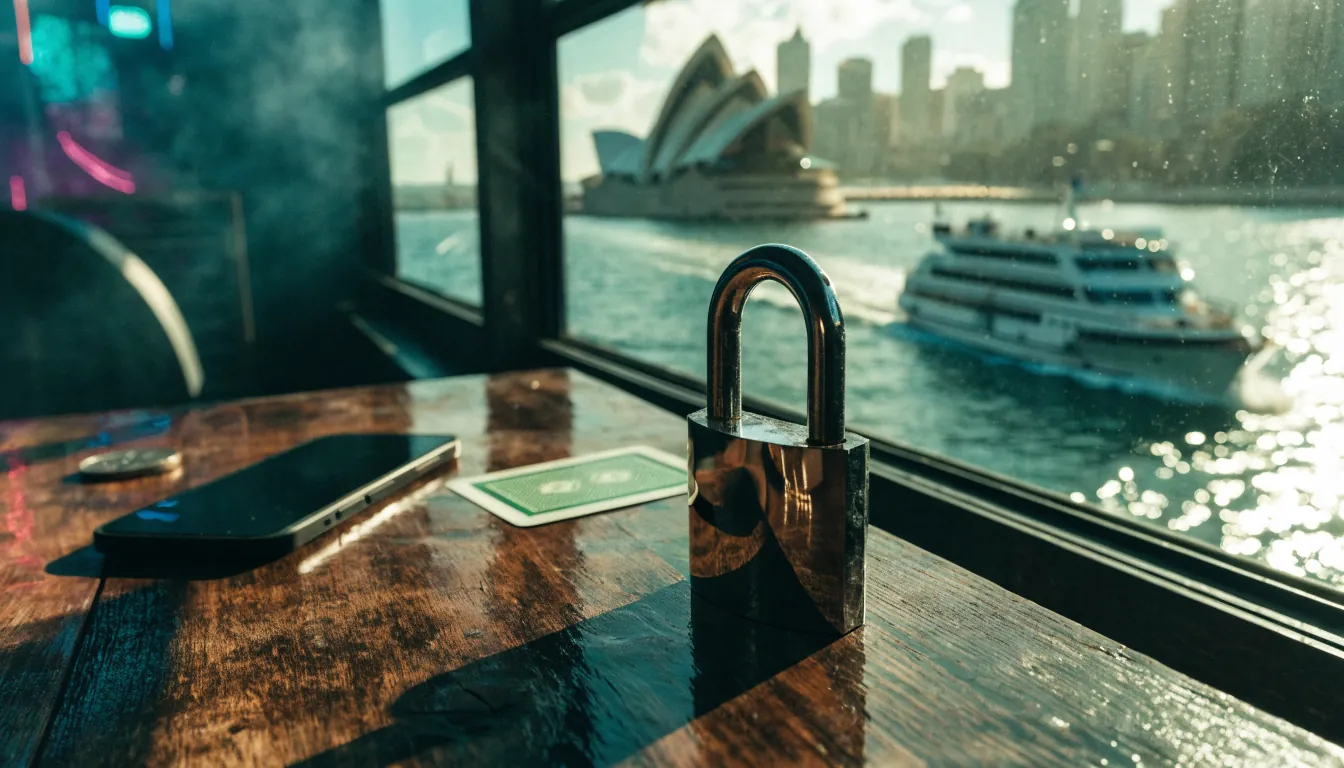
How the licensing structure works
The Curacao Gaming Control Board licenses the platform provider, not each individual casino brand. In practical terms, one named company may operate a branded casino, a sportsbook, and a poker product under the same licensed structure. The brand displayed to customers is not necessarily the entity holding the regulatory relationship.
The commercial barrier to entering this framework should also be kept in perspective. A specialist industry review states that initial setup and first-year Curacao licensing fees can be under $30,000. That figure is not a measure of the operator’s solvency, fairness, or ability to pay withdrawals. Nor does it show how much is spent on compliance, game testing, customer support, or reserves.
This is why a licence check has to remain narrow. It can help establish whether the stated company and licence reference correspond to a real regulatory entry. It cannot turn an offshore casino into a safe source of income.
What the licence does not promise
A Curacao licence does not guarantee prompt winnings, fair bonus enforcement, or successful dispute resolution. It is not a promise that every withdrawal will be approved, that promotional wording will be interpreted in the player’s favour, or that a regulator will recover unpaid funds.
Australian players on Curacao-licensed platforms remain outside the protection of Australian consumer law. They are also not covered by Australian state gambling dispute schemes or ACMA complaint resolution for an offshore casino. BetStop does not cover offshore casinos either. Responsible-gambling controls displayed on the site may still be useful operational tools, but they do not create Australian regulatory cover.
The sensible reading is therefore precise: a Curacao licence may provide a framework for oversight of a named offshore company, including stated controls around AML, responsible gambling, and technical fairness. It does not make an online casino domestic, risk-free, or guaranteed to honour every claim.
A licence is evidence. Not insurance.

Offshore Gambling, VPN Use, and Regulatory Evasion Risks
A VPN can change the apparent location of an internet connection. It cannot change the legal status of an online casino, rewrite its terms, or create a right to payment. That distinction is where many “safe” access claims fall apart.
Under the Interactive Gambling Act 2001, companies cannot offer online casino games to people in Australia. The law targets the provider rather than the individual player, so accessing an offshore site is not the same as committing a criminal offence. It still does not turn the service into a domestically licensed casino. No Australian casino licence exists for this product.
Technical access is not regulatory approval.
A VPN may also conflict with an operator’s terms. If the account is registered as Australian but the connection appears to come from another country, the operator may treat that mismatch as a verification or terms issue. A later withdrawal can then involve additional checks, account restrictions, or a refusal under the published conditions. The exact outcome depends on the operator’s rules; a VPN offers no remedy when funds are withheld.
The protection gap is more important than the connection itself. Playing through a Curacao-licensed platform places the account outside Australian consumer law. Australian authorities cannot be presented as a guaranteed dispute route, and offshore responsible-gambling tools do not create domestic regulatory cover. BetStop does not cover offshore casinos.
The same caution applies to “safe online casino games”, free versions, and sites advertising generous welcome bonuses. A demo game can show how a product works, but it says nothing about whether real-money withdrawals will be honoured. A bonus can describe promotional terms, not the strength of the licence or the quality of dispute handling. Marketing is not oversight.
From behind the counter, the practical rule is blunt: a VPN hides a route, not a risk. Safe casino games are still played only within a framework that explains who regulates the provider and how unpaid funds can be challenged. A blocked market remains blocked.
Can Australians play at offshore online casinos?
No, companies cannot offer online casino games to people in Australia under the Interactive Gambling Act 2001. Offshore platforms may operate under foreign licences, but playing on them places users outside the protection of Australian consumer law.
What is a good RTP for an online pokie?
A good RTP is one that is independently tested and matches the value advertised by the operator. RTP is a long-run mathematical measure, not a promise of a particular result in one session.
Who regulates the Australian gaming industry?
Australian gambling activities are regulated through domestic law agencies, with appropriate licences required for horse racing, lotteries, and regular sports betting. Online casino companies cannot offer casino games to people in Australia under the Interactive Gambling Act 2001.
How do players know their data is secure?
Check that the site uses HTTPS and has a valid certificate issued by a trusted issuer. SSL encryption protects personal and payment information in transit, but it does not prove that the operator is authorised or that games are fair.
Created by the ”Aussie Betting Hub” editorial team.