




Best Pokies in Sydney: Clubs, Casinos and Online
 Available in US
A practical guide to venue-based machines, online reels, opening hours, payout percentages and session risk.
Table of Contents
- What “Pokies” Mean in Sydney: From Club Floors to Online Reels
- The Sydney Pokies Landscape: Clubs, Casinos and the Names That Matter
- Crown, Cashless Play and Sydney Clubs: What the Search Terms Actually Cover
- Online Pokies Near Sydney Central: The Legal Boundary Behind the Search
- The Star Sydney Pokies and Late-Night Casino Expectations
- Pokies Near Sydney Airport: What “Nearby” Can and Cannot Tell You
- 24-Hour Pokies in Sydney: Checking “Open Now” Without Guesswork
- Sydney Pokies Payout Percentage: RTP Is a Long-Run Measure
- Max Bet Pokies in Sydney: Stakes, Volatility and Session Risk
- Pokies Open Till 5am in Sydney: The Last Practical Check
What “Pokies” Mean in Sydney: From Club Floors to Online Reels
In Sydney, “pokies” is not casual slang borrowed from overseas. It is the established Australian term for electronic gaming machines, particularly the machines found on club and casino floors. A local description such as “Sydney pokies” therefore tends to suggest a physical venue first: a room with rows of cabinets, screens, buttons, seats and a defined trading schedule.
That meaning matters because international gambling language uses “slots” or “slot machines” more often. The underlying product may be similar, but the wording points to a different setting. “Pokies” sounds local and venue-based. “Slots” is broader, and can describe an online game, a machine in an overseas casino or a generic reel game in an international review.
I have seen this distinction create unnecessary confusion at the counter. A punter may use “pokies” to mean the machines on a club floor, while a website may use the same word for a digital reel game. The label identifies the style of game, not automatically the place, operator or conditions attached to it.
This page highlights pokies operators worth considering for Sydney players in 2026. Use the details below to quickly assess licensing information, bonuses, deposit minimums and payment-related features.
License: Curacao · Bonus: up to A$10,000 multi-stage + 500 free spins · Min. deposit: A$20 (POLi) Lucky Dreams stands out for a multi-stage bonus of up to A$10,000 with 500 free spins. The minimum deposit is A$20 via POLi, and the operator holds a Curacao licence.
Bonus: up to A$7,500 + 550 free spins across 10 deposits, 50x wagering · Payout speed: crypto under 1 hour, PayID 1-3 business days · Min. deposit: A$20 (A$30 to qualify for the bonus) Ricky Casino offers up to A$7,500 and 550 free spins across 10 deposits, with 50x wagering. Crypto payouts are stated as taking under an hour, while PayID payouts take 1–3 business days; the minimum deposit is A$20, or A$30 to qualify for the bonus.
License: Curacao eGaming OGL/2023/174/0082 (Dama N.V.) · Bonus: up to A$10,000 + 500 free spins across 4 deposits · Min. deposit: A$15 LevelUp Casino features up to A$10,000 plus 500 free spins across four deposits. It has a Curacao eGaming OGL/2023/174/0082 licence held by Dama N.V., and the minimum deposit is A$15.
License: Curacao eGaming Licence · Min. deposit: A$10 PlayWest is notable for its Curacao eGaming licence and a low minimum deposit of A$10.
License: Curacao – Antillephone N.V. (Versus Odds B.V.) · Bonus: up to EUR 2,000 across 5 deposits + 200 free spins · Min. deposit: EUR 20 Thor Casino offers a bonus of up to EUR 2,000 across five deposits, along with 200 free spins. It is licensed in Curacao by Antillephone N.V. for Versus Odds B.V., and the minimum deposit is EUR 20.
License: Curacao eGaming Licence · Min. deposit: A$10 Stake is listed with a Curacao eGaming licence and a minimum deposit of A$10.
License: Curacao Gaming Control Board (TechSolutions Group N.V.) · Bonus: 100% up to A$250 + 100 free spins (1st deposit) Bizzo Casino provides a first-deposit offer of 100% up to A$250 plus 100 free spins. Its licence is issued by the Curacao Gaming Control Board to TechSolutions Group N.V.
License: Curacao · Bonus: up to A$2,000 Golden Pokies is a Curacao-licensed operator offering a bonus of up to A$2,000.
License: Curacao eGaming (Roby Games Ltd) · Bonus: 100% up to A$750 + 200 free spins Roby Casino combines a 100% bonus of up to A$750 with 200 free spins. It operates under Curacao eGaming through Roby Games Ltd.
License: Curacao Gaming Control Board OGL/2023/174/0082 (Dama N.V.) · Bonus: up to A$5,000 + 300 free spins across 4 deposits SpinsUp offers up to A$5,000 plus 300 free spins across four deposits. It holds Curacao Gaming Control Board licence OGL/2023/174/0082 through Dama N.V.
The physical meaning of pokies
On a Sydney club floor, a pokie is an electronic gaming machine designed around spinning reels and symbol combinations. The cabinet may have a familiar branded theme, a wide screen, animated features or a linked jackpot display. The presentation changes from machine to machine, but the term remains stable.
This is why descriptions connected with suburbs, airports or opening times usually sound like venue language. Phrases such as “pokies near North Sydney”, “pokies near me” or “Sydney pokies opening hours” imply a physical location that can be entered, has a schedule and may have its own floor arrangements. They do not describe a particular game mechanic.
The same applies to wording connected with an airport. A reference to pokies at or near Sydney Airport normally places the emphasis on where the machines might be found, not on a special airport version of the product. Location is doing the work in that expression. The machine itself is still a pokie.
“Open now” carries a similar implication. It relates to access to a venue or gaming area at a particular time. It says nothing by itself about which machines are available, how they operate or what their mathematical settings are. Those are separate details, and a short label cannot supply them.
The online meaning
Online operators and game catalogues also use “pokies” when presenting digital reel games to an Australian audience. The interface may show reels, paylines, bonus symbols, animations and a spin control rather than a physical cabinet, but the essential vocabulary remains familiar.

The important point is that online pokies and land-based slot machines use the same reels, RTP and volatility. The difference is mainly local terminology and delivery format. A digital game does not become a different type of reel game merely because it is displayed in a browser or app. Conversely, a physical machine does not become an online product because its theme is also available digitally.
That overlap explains why a phrase such as “best pokies in Sydney 2026” can be read in more than one way. It may refer to machines in Sydney venues, online games marketed with Australian wording, or a mixture of both. The phrase “best” does not resolve the ambiguity. It is a judgement word, not a technical category.
The amount staked can also vary widely online. Most online pokies allow bets ranging from a few cents to hundreds of dollars per spin. That range describes the available staking interface, not a prediction of results and not a recommendation about how a game should be played. A game’s displayed stake options are one feature among many.
Same language, different setting
The cleanest way to read Sydney pokies terminology is to separate three layers:
- Product: the reel-based game itself.
- Setting: a club or casino floor, or an online interface.
- Local wording: “pokies” as the Australian term for the product.
Confusion starts when those layers are treated as interchangeable. A search for pokies near Sydney NSW is location-led. A reference to online reels is product-led. A mention of Sydney pokies hours is schedule-led. None of those phrases, by itself, identifies a particular machine or proves anything about the organisation offering it.
The word “pokies” also does not guarantee that a game is a physical machine. Digital platforms use local terminology because it is recognisable to Australian readers. That wording can make an online reel game feel geographically connected to Sydney even when the interface is not tied to a Sydney venue.
The reverse is true as well. A club may describe its gaming area with formal language such as “electronic gaming machines” or “EGMs”, while ordinary conversation still calls the machines pokies. The formal term suits regulatory or operational documents. The local term suits everyday speech.
That is the practical distinction I keep in mind: “pokies” tells me how Australians commonly name the game, while nearby suburbs, airport references and opening language tell me what sort of access the description is talking about. The label is local. The setting is separate.
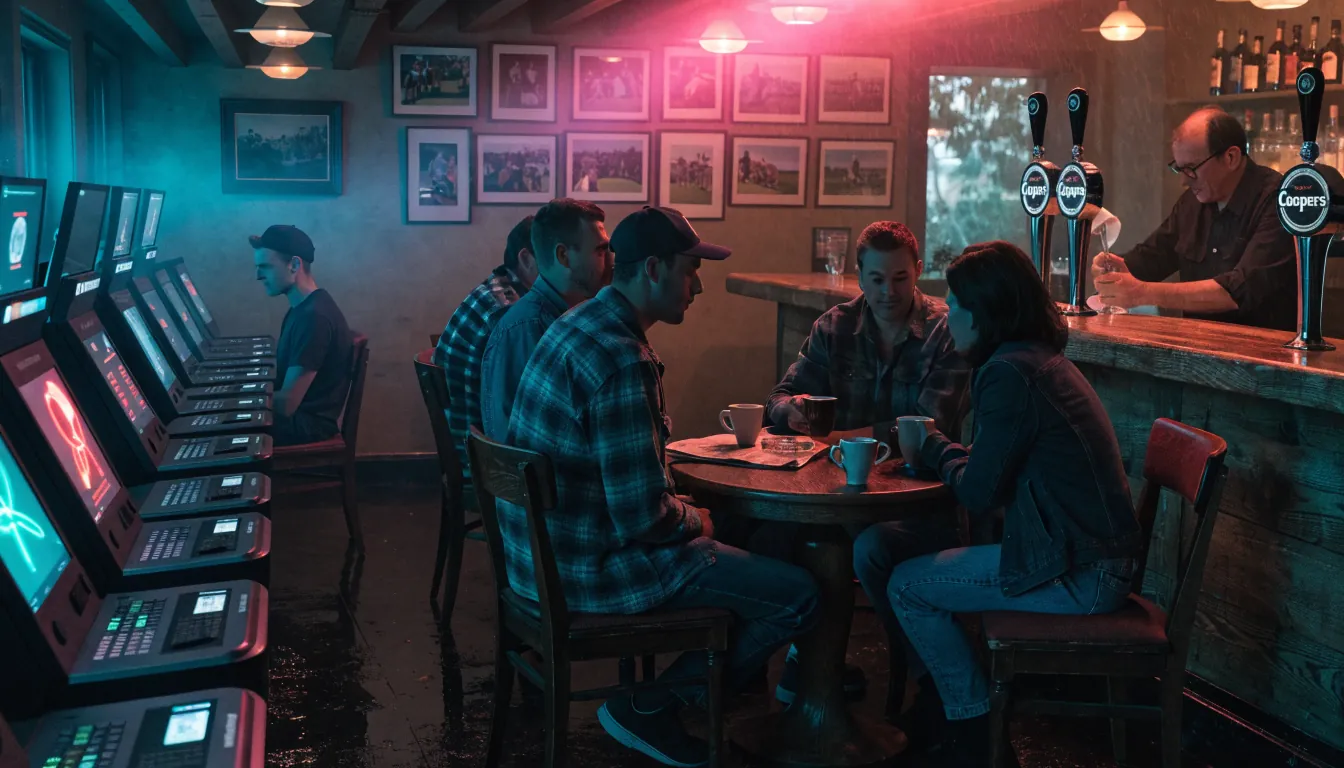
Local land-based venues with community-based formats and physical presence in metropolitan suburbs.
Large-scale venues like Crown Sydney or The Star providing specific gaming environments.
Digital reel games marketed with Australian terminology that do not hold an Australian licence.
The Sydney Pokies Landscape: Clubs, Casinos and the Names That Matter
Sydney’s pokies landscape is easier to understand when the names are separated from the products they describe. Searches mentioning Crown Sydney, The Star, clubs, high-limit play or online access can point to very different settings. A casino floor is a physical venue. A registered club is another kind of land-based setting. An online page using Sydney in its wording is not automatically a Sydney venue, nor does the wording establish an Australian licence.
That distinction matters because the same term—“pokies”—can carry local, commercial and legal meanings at once.
Clubs remain a major part of the local picture
For many Sydney residents, pokies are associated with registered clubs rather than casino branding. Clubs may have gaming areas alongside dining, bars, entertainment and membership services. Their importance in the local landscape comes from their community-based format and physical presence across metropolitan suburbs, not from a claim that every club offers the same machines, limits or conditions.
The word “club” also does not describe one uniform gaming product. A venue may have a particular floor layout, machine mix, membership system and house procedure. Those details belong to the individual venue. A general reference to Sydney clubs cannot establish which games are installed, whether a particular machine is available, or what payment and identification arrangements apply on a given day.

I learned to treat the venue name as an address marker, not as a quality label. “Club” says something about the setting. It does not say everything about the play.
Crown Sydney and The Star occupy a different category
Crown Sydney and The Star are casino names, so they attract a different kind of attention from club venues. Searches for Crown Sydney casino pokies, Crown Casino Sydney pokies or Star Casino Sydney pokies generally indicate interest in casino-based gaming rather than a suburban club floor. The brand identifies a casino environment; it does not by itself confirm the availability of a specific machine, a particular denomination or a high-limit area.
That is where promotional language can blur the picture. “High limit” describes a staking category, not a guarantee of larger returns. “Maximum cash payout” describes a feature people may be trying to locate, but the phrase alone does not prove that a venue offers a particular payout arrangement. Machine rules, venue procedures and product availability need to be treated as separate questions.
Crown Sydney should therefore be read as a named casino venue, while The Star Sydney is another named casino venue. They are not interchangeable labels for every pokie option in the city. A casino search may be about the building, the gaming floor, a specific machine type or the perceived status of the brand. Those are different intentions hiding behind similar wording.
Legal Status Under the Interactive Gambling Act 2001, real-money online casinos offering pokies to Australians are prohibited.
What online-facing names actually indicate
The online side of the market creates the greatest confusion. A page describing “online pokies in Sydney”, “real-money pokies” or a no-deposit offer may be written for Australian visitors, but location wording does not turn an online casino into a local operator. It also does not create an Australian casino licence.
Under the Interactive Gambling Act 2001, real-money online casinos offering pokies to Australians are prohibited. There is no Australian licence for online pokies, and none has existed. Legal gambling options for Australians include land-based casinos, licensed bookies and lotteries; permitted online products include pre-event sports and racing wagering, lotteries and keno. Online casino games, including pokies, are not part of that licensed online category.
That makes “Sydney” a particularly unreliable word on an online casino page. It may be used to target local language, currency or advertising, but it cannot establish that the service is physically based in Sydney or authorised to offer online pokies to Australian residents. The name is marketing context, not regulatory evidence.
No-deposit and real-money wording
“No deposit” is another phrase that needs to be read literally. It may describe a promotional mechanic, but it does not change the status of the underlying product. A no-deposit offer for online pokies remains connected to an online casino service, and promotional wording cannot override the Interactive Gambling Act.

The same applies to “real money”. That phrase identifies the type of play being promoted; it does not show that the operator is locally licensed, that Australian consumer protections apply, or that the service belongs in the same category as a land-based casino. Payment references require particular caution as well. A profile of the market notes that, since 11 June 2024, credit cards, credit-related products and cryptocurrency are banned as payment methods for online wagering in Australia. That observation comes from a specialist industry overview, and it should not be stretched into proof that an online pokies service is lawful.
Self-exclusion belongs to the venue and scheme context
Self-exclusion searches also cross category boundaries. In a physical casino or club setting, self-exclusion may relate to the venue’s own process and the conditions attached to that arrangement. It should not be assumed that one venue’s procedure automatically applies to every club, casino or offshore website.
Nor does the phrase establish that an online casino is covered by an Australian national self-exclusion register. The market’s categories remain separate: club gaming, casino gaming and online casino advertising are not one connected system merely because all use the word “pokies”.
The practical map is therefore straightforward:
- Registered clubs: local land-based venues with their own gaming-floor arrangements.
- Crown Sydney and The Star: named casino venues, with availability and conditions determined by the venue rather than by the brand name alone.
- Online pokies pages: online casino offerings that may use Sydney-focused wording but cannot claim an Australian online-pokies licence.
- Promotional terms: descriptions of an offer or staking feature, not evidence of legality, fairness or consumer protection.
Once those categories are kept apart, the names become useful without being overinterpreted. A venue name can identify where a physical gaming environment exists. An online label can reveal the intended audience. Neither name, standing alone, proves more than that.
Crown, Cashless Play and Sydney Clubs: What the Search Terms Actually Cover
The words attached to Sydney pokies are often more specific than they first appear. “Crown Sydney pokies” can point to a physical casino question, while “Sydney clubs pokies” usually describes gaming rooms in registered clubs. Add “cashless” and the subject shifts again: the focus is no longer simply where the machines are, but how funds and play records are handled.
That distinction matters because a venue name is not a complete description of the product. Crown Sydney, a hotel gaming room, a club in North Sydney, and an online page using Sydney in its wording are different things. Search language places them in one mental category. The operating model does not.
What Crown-related wording actually identifies
References to Crown Sydney or “pokies at Crown Casino Sydney” normally identify a land-based venue rather than an online casino. The wording may still leave several details unstated: whether the interest is in the physical gaming floor, the available electronic gaming machines, membership arrangements, or simply the expectation that a casino will offer familiar pokie titles.
A brand name also does not establish every condition that matters to a punter. It does not, by itself, prove that a particular machine has better returns, that a payment method is available, or that a named online page has any connection with the venue. The same caution applies to phrases such as “best paying pokies Sydney”. “Best paying” is a promotional description unless it is tied to a defined and independently supported measure. A venue’s reputation is not an RTP statement.
I have seen this confusion arise at the point where a familiar name does too much work. A reader sees Crown, casino, and pokies in one line and assumes that the surrounding claims inherit the authority of the name. They do not.
A name is not evidence.
Clubs are a separate setting
“Sydney clubs pokies” and “hotel pokies Sydney” generally refer to gaming machines in hospitality or registered-club environments. “North Sydney pokies” adds a location filter, not a guarantee about the premises, machine mix, or current availability. The practical setting can differ from a casino in layout, membership expectations, food and beverage service, and the way the gaming area is presented.
Those differences explain why the same word—pokies—can describe several local experiences. A club floor may be the intended subject when someone uses “cashless pokies Sydney”, even though the phrase sounds like a payment search. Another person may mean whether a casino has introduced a cashless account or carded-play system. The wording alone cannot settle that point.
Nor does “club” automatically mean a particular level of consumer protection beyond the rules and controls that actually apply to the venue. A label can identify the type of premises. It cannot fill in missing terms, conditions, or payment details.
Cashless play is a payment and record-keeping question
Cashless pokies are not simply machines that accept a bank card. The phrase can cover a system in which funds are connected to an approved account, card, or venue-controlled wallet, with play and transactions recorded through that system. The important questions are operational: how money is loaded, how balances are displayed, what identity checks apply, how withdrawals or redemptions work, and what happens if an account is suspended or a transaction is disputed.
PayID is often brought into the same conversation, but it is a payment method rather than proof that a venue offers cashless play. PayID links directly to an Australian bank account and settles deposits instantly without a card-processing delay. PayID itself does not charge the player a transaction fee. Those are payment characteristics; they do not describe the machine, the venue, or the odds.
That separation is easy to lose in short commercial copy. “Cashless” may describe the movement of funds. “Pokies” describes the game environment. Neither word proves that the two are available together at a named Sydney location.
The same applies to online wording. An online page may use Sydney in its title, accept an Australian payment method, or display familiar game names. None of that turns it into a Sydney club or Crown-operated service. A local place name can be a description of its intended audience rather than its physical location.
Why the overlap creates misleading shortcuts
The most compressed phrases combine venue, product, and payment language: casino Sydney pokies, Crown Sydney pokies, cashless pokies Sydney, or online pokies Sydney. Each element carries a different question.
- Venue: Is the subject a casino, club, hotel, or another physical premises?
- Product: Is the subject an electronic gaming machine or an online game using similar reels?
- Payment: Is the interest in cashless play, PayID, cards, or account-based transactions?
- Location: Does Sydney identify the premises, the audience, or merely the wording of a webpage?
A responsible description keeps those questions separate. That is especially important where online casino games are concerned. The fact that players are not prosecuted under the Interactive Gambling Act does not make every provider lawful or locally licensed. Enforcement targets the provider, not the individual punter. A Sydney reference, Crown branding, or PayID support cannot reverse that distinction.
In practical terms, the search language should be read as a starting label, not a conclusion. Crown-related wording may indicate a physical venue. Club wording may indicate a local gaming room. Cashless wording may indicate account-based play. “Best paying” may be an unverified claim. Only the underlying venue information, game information, and payment terms show what is actually being offered.
That is the part the short label leaves out.
Online Pokies Near Sydney Central: The Legal Boundary Behind the Search
“Near Sydney” sounds like a location. For an online pokie service, it usually describes the intended audience, not the position of a venue. A site can use Sydney imagery, quote Australian dollars, accept Australian punters, or present itself as suitable for New South Wales without having premises in the CBD. None of those signals turns a remote operator into a local casino.
That distinction matters because online casino games occupy a different legal category from physical gambling venues. The Interactive Gambling Act 2001 prohibits providers from offering online casino games, including pokies, to people in Australia. There is no Australian licence for a domestic real-money online casino. A page using local language cannot create one.
Local wording is not local authorisation.
What “near Sydney” can mean online
An online service may be accessible from a Sydney address while being operated from another jurisdiction. Offshore casinos based in Curaçao, Anjouan, or similar jurisdictions accept Australian players. Their websites may be designed for Australian traffic, show Australian payment methods, or use terms such as “NSW pokies” and “Sydney casino”. Those details describe targeting and access, not Australian licensing.
The same applies to an address-style label. “Sydney Central” may appear in a page title because the operator wants to match a local interest. It does not show that the company has a gaming floor near Central Station, that its machines are located in New South Wales, or that a state regulator supervises the online service.
Offshore Licensing Online services using Sydney-focused wording may be operated from jurisdictions like Curaçao or Anjouan. This means they follow foreign regulations rather than Australian law, even if they accept local currency or targeting.
I have seen this confusion arise when a venue name, a city reference, and a remote gaming page are placed beside one another. The presentation feels local. The operating status is a separate question.
Offshore does not mean Australian-licensed
The fact pattern is more precise than the advertising language. An offshore casino may accept Australian residents, but it is not an Australian-licensed online casino. Its licence, if it holds one, comes from the jurisdiction in which it operates. Curaçao and Anjouan are examples of jurisdictions associated with offshore operators serving international markets.
That licence may relate to the operator’s home jurisdiction and its compliance obligations there. It does not replace an Australian casino licence, because no such domestic licence exists for real-money online pokies. Nor does a foreign licence make the service a Sydney venue.
The distinction also prevents a common mistake in descriptions of fairness. Licensed Australian-facing platforms are required to use independently audited random number generators. That is a statement about the operating requirements attached to the relevant platform and its licensing arrangement; it is not something that can be inferred from the word “Sydney”, an Australian flag, or the appearance of a pokie interface.
How to read a local-looking page
A practical assessment separates presentation from status:
- Location language: a reference to Sydney, NSW, or the CBD identifies the intended market or theme, not the physical location of the reels.
- Operator identity: the company behind the site matters more than the city named in a headline.
- Regulatory jurisdiction: an offshore licence and an Australian gambling licence are not interchangeable.
- Game access: Australian residents may legally play online pokies at licensed offshore casinos, but that does not make the product locally licensed.
- Technical assurance: independently audited random number generation is a licensing-related requirement, not a consequence of Australian branding.
This is why “online pokies near Sydney” should not be treated as the digital equivalent of finding a club nearby. A physical venue has an address that can be checked as a place. An online operator has a corporate identity, a jurisdiction, and terms governing access. Those are the relevant boundaries.
The provider’s status comes first.
A page can look thoroughly Australian and still be offshore. It can be reachable from Sydney without being located there. It can carry a foreign licence without possessing permission to operate an online casino under Australian law. The wording may be commercially useful, but it cannot settle the legal question.
For that reason, “pokies near Sydney Central” is best understood as a description of intended access rather than geographic proximity. The city reference helps explain who the page is speaking to. It does not establish a local venue, a local licence, or local consumer protections. Those conclusions require evidence about the provider and its regulatory jurisdiction, not a familiar name in the page title.
The Star Sydney Pokies and Late-Night Casino Expectations
The Star Sydney is often treated as shorthand for a particular kind of night out: a large casino floor, electronic gaming machines, and the possibility of continuing after other venues have closed. That shorthand is useful only up to a point. A casino name identifies a venue; it does not, by itself, establish that every gaming area operates around the clock or that access is unchanged throughout the night.
I learned to separate the floor from the assumption attached to it. A venue may have an extensive pokies offering while particular areas, services, or entry conditions follow their own operating arrangements. “Late-night casino” is therefore a description of the setting, not a promise of uninterrupted access.
The same distinction matters when someone searches for The Star Sydney pokies. The relevant question is not simply whether electronic gaming machines exist there. It is whether the premises are currently open, whether the relevant gaming area is operating, and whether the conditions for entry or play have changed. Those details belong to the venue’s current information, not to the reputation of the name.

Casino scale can also distort expectations about the games themselves. A busy floor does not make one machine more likely to pay on the next spin. Each spin is independent, and the previous result has no bearing on the next outcome. Nor does a long session turn a theoretical return figure into a personal guarantee. RTP describes a long-run average across many plays, not the result of one visit.
Volatility creates another misleading impression. High-variance pokies tend to pay less frequently but in larger amounts; low-variance games tend to pay more often in smaller amounts. Neither description answers whether a particular late-night session will finish ahead.
So the practical reading is narrow: The Star may be the venue intended, but “all night” still needs confirmation. Big casino. Separate question.
Pokies Near Sydney Airport: What “Nearby” Can and Cannot Tell You
“Near Sydney Airport” is a location description, not a quality mark. It may point to a venue in the airport precinct, a club in a neighbouring suburb, or a result that treats a broad travel area as one convenient zone. The wording says where a place may be found. It does not establish what games are available, whether the venue is operating, or whether the information is current.
That distinction matters because airport searches are driven by convenience. A traveller may be looking for a short trip between a flight, accommodation and an evening out. A local punter may mean the wider area around Mascot, the inner south or nearby club districts. Those are different practical needs, even when the same location phrase describes both.
A map pin is only the first check. The venue’s own information should confirm its address and current trading status. A third-party listing can retain an old description after a venue changes its gaming area, reduces access or stops operating. “Nearby” can also reflect a marketing label rather than a measured distance.
The name of a venue provides no evidence about its pokie floor. It does not confirm the number or type of electronic gaming machines, the availability of particular titles, membership requirements or entry conditions. Those details belong to the venue itself and can change independently of its location.
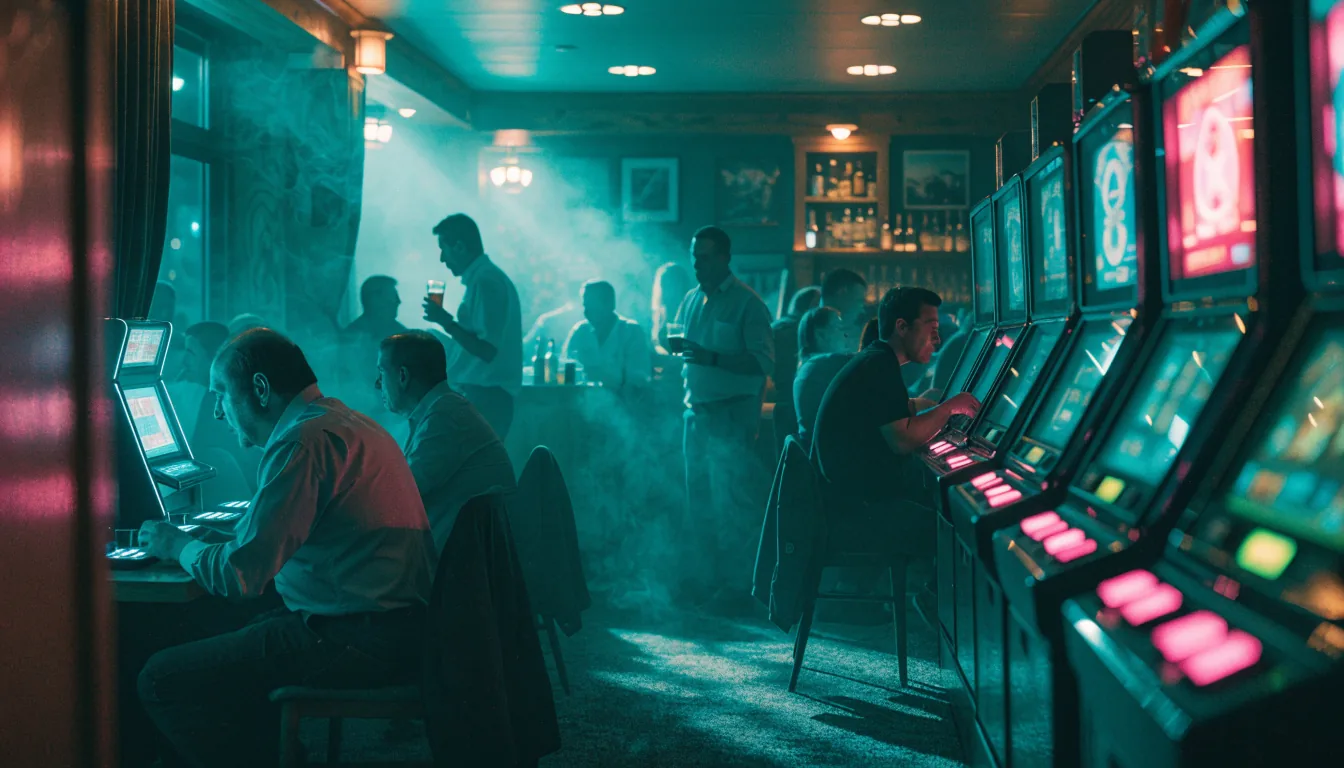
The legal category is separate again. Australians may use land-based casinos and other lawful gambling options such as licensed bookies and lotteries. A physical venue close to the airport is not automatically equivalent to an online service using airport-related wording. Location language cannot create an Australian licence, prove oversight or supply consumer protections that the product does not have.
I learned to treat airport proximity as a transport detail, not a recommendation. The useful sequence is plain: identify the actual venue, confirm that it is currently operating, then check what the venue says about access and gaming. No shortcut.
One further point gets lost in travel-focused advertising. A convenient address does not change the mathematics of a pokie. Each spin is independent; the previous result has no bearing on the next outcome. Being close to a terminal may reduce travel time, but it cannot make a machine more due, safer or more likely to produce a particular result.
24-Hour Pokies in Sydney: Checking “Open Now” Without Guesswork
A listing that says “open 24 hours” is not the same thing as confirmed access to pokies at the time of arrival. In Sydney, operating hours can apply to the building, the club’s reception area, a restaurant, or another facility rather than the gaming floor itself. A generic directory entry may also remain visible after trading arrangements have changed.
That distinction matters most when the intention is immediate play. The relevant question is not whether a venue has ever advertised extended access, but whether its doors, gaming area and current operating conditions match the stated time. A venue may be open while particular sections are closed, restricted or unavailable.
I learned to treat “open now” as a status requiring direct confirmation, not as a permanent feature attached to a venue name. The practical checks are simple:
- confirm the current hours through the venue’s own channel;
- check whether the information refers specifically to the pokies or gaming area;
- look for same-day notices, temporary closures or changed trading arrangements;
- confirm any entry conditions before travelling.
Third-party map listings are useful for finding a starting point, but they are not proof of live availability. The older the listing, the less safely it can be treated as current. Even a prominent 24-hour label may describe a standard schedule rather than the position on a public holiday, during maintenance or after an operational change.
The timing of a visit also says nothing about the likely result. Each spin on a pokie is independent; a win or loss earlier in the session has no bearing on the next outcome. A venue staying open through the night does not make a machine “due”, and a quiet floor does not alter its mathematics.
The same caution applies to RTP. It is a long-term theoretical average, not a promise for one late-night session. Extended opening hours change availability, not the underlying probability of an individual spin.
Open now is a live status.
Sydney Pokies Payout Percentage: RTP Is a Long-Run Measure
RTP, or Return to Player, is the figure used to describe a pokie’s theoretical payout percentage over a very large number of spins. It is not a promise attached to a single machine visit, a particular day, or one punter’s balance. If a game has an advertised RTP, that figure describes the mathematical expectation across extended play, not the result that must appear during an individual session.
That distinction is where many “payout percentage” claims become misleading. A high RTP does not mean that the next spin is more likely to win, nor does it require a machine to return money after a losing sequence. Each spin is independent. The previous result has no bearing on the next outcome.
In practical terms, RTP is better understood as a long-run theoretical average than as a short-term forecast. A session can finish below the stated figure, above it, or with no meaningful result either way. The percentage does not track the order of wins and losses, and it cannot identify when a payout is due.
RTP Definition RTP (Return to Player) is a long-run theoretical average across many plays, not a guarantee of what a single session or specific visit will return.
What the percentage does not show
RTP does not reveal the outcome of the next spin. It also does not guarantee a particular return from a Sydney venue, a specific game, or a single run of play. A displayed percentage is therefore useful for comparing the mathematical design of games, but not for predicting what one visit will produce.
The wording matters. “Higher payout percentage” sounds like a near-term advantage; in reality, it refers to a theoretical average measured across prolonged play. That is a much narrower claim.
From behind the floor, I found this the easiest rule to keep in mind: RTP describes the game’s model, not the punter’s result.
Long-run figure. Short-run uncertainty.
Max Bet Pokies in Sydney: Stakes, Volatility and Session Risk
A “max bet” pokie is defined by the highest stake the game permits on one spin, not by the size of its advertised jackpot. For online pokies, the available range can run from a few cents to hundreds of dollars per spin. That range describes the game’s controls, not a sensible session budget or a likely outcome.
The more important distinction is volatility. High-variance pokies tend to pay less frequently, with larger amounts when a winning result occurs. Low-variance pokies tend to produce wins more often, but those wins are smaller. Neither label changes the independence of each spin. A quiet run does not make a larger result due, and a previous win does not improve the next chance.

What a high maximum stake changes
Selecting the maximum setting increases the amount exposed on every spin. The game’s volatility remains the same, but the financial effect of its pattern becomes larger. On a high-variance pokie, infrequent wins can leave a session moving sharply between losses and occasional larger returns. On a low-variance game, more frequent smaller wins may feel steadier, yet the stake still leaves the balance exposed repeatedly.
That is the part promotional descriptions often leave out. “Maximum bet” sounds like a feature; in practice, it is a control with a higher cost per result. It does not guarantee a jackpot, unlock a better outcome, or change the underlying randomness.
I have seen the same mistake from both sides of the counter: treating the permitted stake as a target. It is not. The useful comparison is between the chosen stake, the game’s volatility, and how long the session can absorb losing spins.
Bigger stake. Wider swings.
Pokies Open Till 5am in Sydney: The Last Practical Check
A venue advertised as operating until 5am should not be treated as a standing promise that the gaming floor will be available at that time. Late-night hours can depend on the venue’s current operating status, special arrangements, staffing, maintenance, or changes to access conditions. A listing may remain visible after the underlying information has changed.
The useful check is therefore narrow and practical:
- confirm the venue’s current opening status through its own live contact channel;
- check whether the stated time applies to the whole venue or only selected facilities;
- verify that the gaming area is operating, rather than assuming that food, bars, or reception hours cover pokies;
- treat a “5am” reference as an advertised closing time, not evidence of uninterrupted access.
I have seen the distinction matter at the desk. “Open” can describe the building. It does not always describe every room inside it.
What the time does not establish
A late closing time says nothing by itself about game quality, RTP, volatility, payout outcomes, or the protections attached to play. Nor does it turn an online service into a local Sydney option. Physical availability and legal status are separate questions.
For online real-money pokies, the governing boundary remains the Interactive Gambling Act 2001. Online casino games offered to Australian customers are prohibited, and there is no Australian casino licence for that product. The law targets the provider rather than the individual punter, so players are not prosecuted under the Act. That distinction explains enforcement; it is not an endorsement of an offshore service.
At 5am, the final check is simple: current venue status first, gaming-floor availability second, and the legal position kept separate from the marketing language. Advertised hours are a starting point. Not proof.
Is it legal to play online pokies in Australia?
No. Real-money online casinos offering pokies to Australians are prohibited under the Interactive Gambling Act 2001, although players are not prosecuted under that law.
What does a licensed online casino Australia actually mean?
It does not mean there is an Australian licence for online pokies: no such licence has ever existed. Australian-facing offshore casinos may operate under licences from jurisdictions such as Curaçao or Anjouan, but online casino games remain prohibited from being offered to people in Australia.
What are the implications of demo mode and free play on financial rules?
Demo or free play does not involve real-money wagering, so the payment rules described for online wagering do not apply to a cash stake. Online pokies offered for real-money play to Australians remain prohibited.
Prepared by the Aussie Betting Hub editorial staff.